
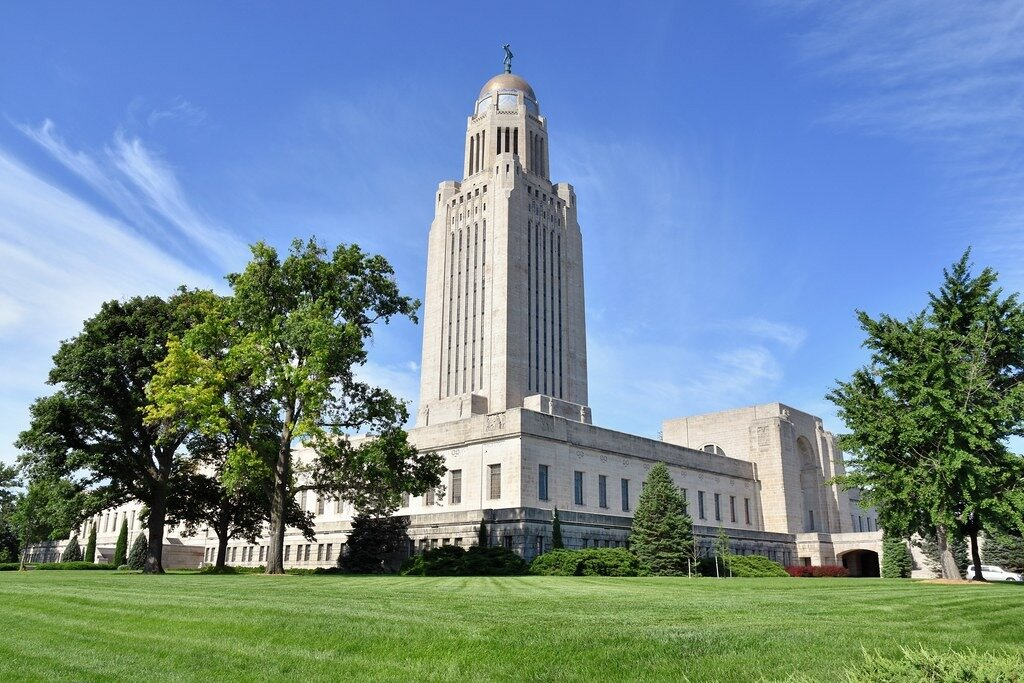
Nebraska’s building landscape will look different as 2026 begins, not through a single sweeping code change, but via a series of policy moves that tighten how rules are written, reviewed, and enforced. For firms that practice across the state’s diverse jurisdictions, the headline is simple: you will see more rigorous rule reviews, clearer procurement options for state projects, and continued pressure to document energy performance. The details matter, because they influence delivery methods, submittals, and the way you model sites, roofs, and terrain from day one.
A new cadence for rulemaking starts January 1, 2026
Under LB660, state agencies must begin a systematic review of all existing and pending rules on January 1, 2026, and repeat that review every five years. The law requires agencies to evaluate whether each rule protects health and safety, whether costs outweigh benefits, and whether less restrictive alternatives exist. Annual progress reports will flow to the Legislature each June. That means construction-facing rules at agencies such as Administrative Services, the State Fire Marshal, and the Department of Water, Energy, and Environment will face regular scrutiny, which can translate into clarifications for permitting, inspection, and state project delivery.
Procurement on state projects: design-build and CM/GC are in play
LB660 also adopted the State Building Construction Alternatives Act. For state buildings overseen by specific “authorized agencies,” the act formally allows design-build and construction manager–general contractor (CM/GC) delivery. CM/GC is limited to projects over 30 million dollars and both delivery methods require an approval process, shortlisting, and best-value evaluation. Agencies must retain a Nebraska-licensed architect or engineer to develop performance criteria, help evaluate proposals, and verify that construction adheres to those criteria. For teams pursuing public work in 2026, this creates a clearer lane to propose schedule-sensitive approaches, provide constructability input earlier, and align life-cycle tradeoffs with the owner’s performance targets.
Timing note. LB660 took effect in 2025, but the mandated five-year rule reviews begin in 2026, so firms should expect updated guidance, templates, and evaluation practices to appear across that calendar year.
Check also: https://topwaynews.com/why-every-business-needs-reliable-cybersecurity-and-it-solutions/
The baseline codes you design to, and how local adoption works
Nebraska’s state building code is set by statute. Today the law adopts the 2018 editions of the International Building Code, International Residential Code, and International Existing Building Code. Local governments can amend within limits, but the state code remains the legal standard for state-owned buildings.
Local adoption is not optional or open-ended. By statute, if a county, city, or village fails to adopt a construction code that “conforms generally” to the state building code within two years of a state update, then the state building code applies in that jurisdiction. The statute also calls out minimum standards for radon-resistant new construction as a component local codes must include. For designers, this two-year backstop reduces ambiguity when crossing city limits, because the state standard fills any gaps.
Energy performance: what is in force and what may evolve
Nebraska’s energy code is statewide and references the 2018 International Energy Conservation Code (IECC), effective July 1, 2020. Local jurisdictions must adopt the Nebraska Energy Code or a code at least as efficient.
In May 2025, the state published an energy impact study comparing the 2018 IECC to the 2024 IECC for Nebraska homes. The study estimated that buyers of new homes would save about 50 to 295 dollars per year depending on house size and location, with a first-year statewide saving of roughly 254,000 dollars and lifetime savings of 59.6 million dollars across the homes evaluated. Even if policymakers take time to act, those quantified savings are likely to shape 2026 rule reviews and local debates. Teams should be ready to document envelope, HVAC, and solar-ready choices with clear, code-traceable assumptions.
Licensure mobility for architects: an administrative shift in 2026
For firms that rely on NCARB certification to expedite reciprocal licensure, there is a practical change on the horizon. Nebraska’s licensing board has noted NCARB’s decision to remove the three-year waiting period for the Education Alternative pathway effective January 15, 2026. This is an NCARB policy, not a state statute change, but it can expand who on your team becomes NCARB-certified in 2026, which matters on multi-state pursuits.
What this means for your 2026 submittals
- Expect updated checklists. As agencies implement LB660’s review cycle, anticipate refreshed forms for performance criteria on state projects and tighter documentation standards in RFQs and RFPs. Early coordination between design and construction will be rewarded under design-build and CM/GC.
- Design to the state code, track local amendments. In most places you will still be designing to the 2018 IBC/IRC family with local tweaks. If the Legislature updates the state code, locals have two years to conform or the state code applies automatically. Plan your details and specifications so they stand even if a jurisdiction’s update lags.
- Energy documentation should be audit-ready. Whether or not an updated IECC is adopted in 2026, the state’s own analysis has framed energy savings in concrete numbers. Be ready with clear compliance paths, load calcs, and tradeoff analyses that can survive a plan review or value-engineering cycle.
Modeling the site and building together, so compliance is visible
This is the moment where software tightens the loop between concept and permit reality. A practical workflow begins in a floor plan software environment that can represent both the building and the site with enough fidelity to answer plan-review questions. Cedreo’s toolset lets teams draw accurate 2D plans, view a synchronized 3D model, and include site and terrain features. You can model slopes with elevation points and lines, place the building precisely on the natural and finished grade, and produce site plans, roof plans, elevations, sections, and electrical plans in one project. For coordination with consultants, Cedreo supports DXF export of floor plans and site plans, and it can import DWG/DXF to trace property lines. That keeps permit drawings, pre-bid packages, and owner visuals aligned as specs evolve.
Why it matters for 2026. Under LB660, state projects will emphasize performance criteria in RFPs. When your model already encodes roof pitch, drainage paths, and site constraints, you can generate roof plans, terrain-aware sections, and site exhibits that respond directly to those criteria and reduce back-and-forth in best-value competitions.
Practical example: a state facility and a private infill
- State project using CM/GC. Imagine a 42 million dollar corrections or DOT facility. Under LB660, the agency can solicit a CM/GC, prequalify teams, and evaluate proposals on best value with cost carrying at least 50 percent of the weighting. Your early packages should include a performance-criteria narrative, phased logistics drawings, and robust site and roof plans that surface constructability and schedule risks.
- Private infill in a city slow to update. You design a mixed-use building in a jurisdiction still on an older local code. Because Nebraska law requires locals to conform to state updates within two years or default to the state code, your safest course is to detail to the state standard and document any local amendments explicitly. Treat radon-resistant construction as a minimum expectation, since statutes call it out as a required component.
Data points worth noting
- The energy impact study projects 59.6 million dollars in lifetime homeowner savings if Nebraska moves from the 2018 IECC to the 2024 IECC, with 50 to 295 dollars in annual savings per home depending on size and location. Use those figures to frame envelope and HVAC decisions in owner meetings.
- CM/GC eligibility under LB660 begins at 30 million dollars total project cost for state buildings within authorized agencies, ensuring the method targets large projects where preconstruction services and overlapping phases deliver the most benefit.
- Rule reviews begin January 1, 2026, and every rule must be reviewed on a five-year cycle, which can influence the pace of clarifications to forms, processes, and interpretations seen by design teams.
What to do now
- Audit your templates. Verify that your code notes and details reflect Nebraska’s 2018 IBC/IRC baseline and the statewide 2018 IECC, with a clear place to insert local amendments.
- Align deliverables with performance criteria. If you pursue state work, build a repeatable package that includes site descriptions, surveys, soil information, and milestone dates, mirroring LB660’s language.
- Make energy choices explicit. Use the state’s 2025 impact findings to rationalize U-values, heat pump selections, and orientation. Keep a clean trail of inputs for reviewers.
- Model terrain and roofs up front. Your plan set will benefit when swales, slopes, and downspout locations are visible in roof plans and site drawings generated from the same model. Cedreo’s documentation shows how to create roof plans and terrain-aware site plans and to export them for consultants.
- Plan staffing for licensure mobility. If NCARB certification becomes accessible to more of your staff in 2026, sequence who applies first so your pursuit teams gain the broadest coverage early.
In summary
Nebraska’s 2026 is not a wholesale rewrite of construction rules. It is a reset of how often rules are tested, a clearer path for alternative delivery on state buildings, and an evidence-based push to quantify energy performance. Firms that respond by tightening their modeling workflows, documenting performance criteria early, and keeping code assumptions explicit will move faster through plan review and procurement. The state has already signaled the outcomes it values: transparent criteria, competition focused on value, and measurable performance. Design teams that show those outcomes in their drawings and packages will be best placed to win and build in 2026