




What Are AI Crypto Tokens?
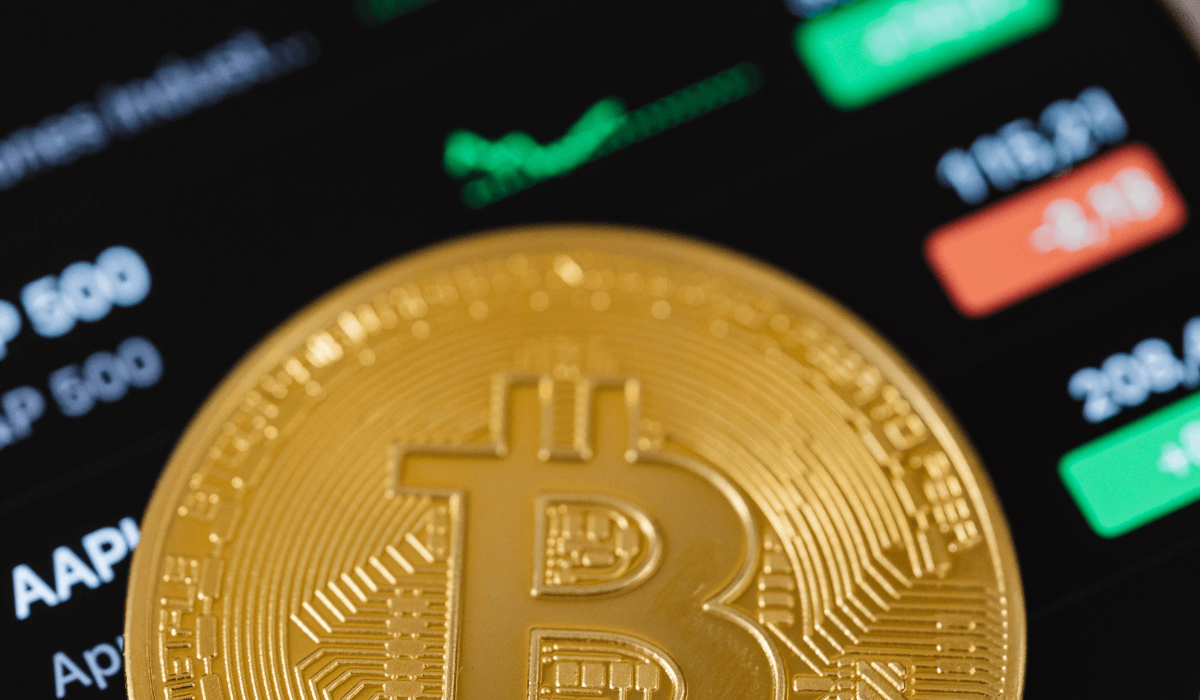
AI crypto tokens are digital assets issued on blockchain networks that power platforms combining artificial intelligence with decentralized technology. They are used to pay for AI services, reward contributors, and govern AI-driven ecosystems — all without centralized control.
To understand AI crypto tokens, you need to understand two technologies separately: cryptocurrencies and artificial intelligence. A cryptocurrency is a digital asset that lives on a blockchain — a transparent, decentralized ledger maintained by a distributed network of computers. Artificial intelligence refers to systems and algorithms that can learn from data, make predictions, generate content, or perform complex tasks autonomously.
When you combine these two technologies, you get AI crypto tokens. These tokens power platforms where AI and blockchain work together. They’re used to pay for AI services (like renting GPU compute or accessing datasets), earn rewards by contributing resources, and vote on platform governance. They’re not just coins with ‘AI’ in the name — genuine projects have real AI infrastructure behind them.
Think of them this way: just as ETH powers the Ethereum ecosystem and SOL powers Solana, AI crypto tokens power their respective AI-blockchain platforms. Without the token, the platform cannot function — the token is the economic fuel.
Related: What is Cryptocurrency?
Key Statistics (March 2026)
| $28B+
AI token sector market cap (2026) |
40.9%
single-day sector gain (March 2026) |
120+
active subnets on Bittensor alone |
3
mega-mergers forming ASI Alliance |
2. How Do AI Crypto Tokens Work?
From a technical standpoint, AI crypto tokens are not fundamentally different from other blockchain tokens. They live on Layer 1 blockchains like Ethereum, Solana, or Cosmos, and use standard token frameworks (such as ERC-20). What makes them unique is what the token is used for and the AI infrastructure it connects to.
The Token’s Three Core Functions
Most AI crypto tokens serve one or more of the following roles:
- Payment & Access — Tokens are spent to access AI services: renting GPU compute, querying an AI model, or purchasing a dataset.
- Incentive & Reward — Contributors (GPU hosts, data providers, model trainers) earn tokens as compensation for their resources.
- Governance — Token holders vote on protocol upgrades, fund allocations, and platform direction through decentralized autonomous organizations (DAOs).
How a Transaction Works — Step by Step
- A user needs an AI resource (GPU compute, a dataset, an AI agent). They acquire the project’s native token.
- The token creates a trustless transaction. The user pays tokens to a smart contract — a self-executing piece of code that holds funds and releases them only when the agreed service is delivered.
- The provider delivers the service. A node operator provides computing power, a data owner shares their dataset, or an AI agent completes a task. The blockchain records the transaction immutably.
- Tokens are released. The smart contract releases tokens to the provider. Some protocols burn a percentage (reducing supply), while others require providers to stake tokens as collateral.
| Key insight: AI crypto tokens solve a real global problem. If a developer in Argentina needs GPU computing from a provider in South Korea, paying in fiat currencies is slow, expensive, and restricted. Tokens are permissionless (no bank approval), borderless (not tied to any country), and fractionalized (divisible for micropayments). |
3. AI Crypto Tokens vs. Regular Cryptocurrencies
Many investors confuse AI crypto tokens with traditional cryptocurrencies. The distinction matters enormously when evaluating whether a project has real value or is simply riding the AI hype wave. The critical distinction is value source — Bitcoin’s value comes from its scarcity and network security. An AI crypto token like TAO theoretically derives value from real AI computing activity on the network.
| FEATURE | AI CRYPTO TOKENS | TRADITIONAL CRYPTO (E.G. BTC) |
| Primary purpose | Power AI platforms, pay for AI services | Digital payments, store of value |
| Underlying tech | Blockchain + AI/ML algorithms | Blockchain / distributed ledger |
| Token utility | Compute, governance, data purchase | Transaction fees, speculative value |
| Value driver | AI compute demand, platform usage | Scarcity, network adoption |
| Smart contracts | Central to function | Bitcoin: None; ETH: Basic |
| Governance | Token-holder DAOs | Developer-led or miner-based |
| Sector risk | AI regulation + crypto volatility | Crypto market volatility |
| AI integration | Direct, real-world connection | No AI integration |
4. Key Use Cases of AI Crypto Tokens
The most credible AI crypto projects solve real infrastructure problems that centralized AI companies struggle with. Here are the most important categories:
Decentralized GPU Computing
Training and running AI models demands enormous computing power. Cloud providers like AWS and Google Cloud dominate this market at premium prices. Decentralized GPU networks — powered by tokens — allow anyone with spare GPU capacity to rent it out globally, often at a fraction of centralized costs. Key projects: Render Network (RNDR) and Akash Network (AKT).
AI Model Marketplaces
Decentralized AI marketplaces let developers publish, discover, and monetize AI models without relying on a single company’s platform. SingularityNET (now part of the ASI Alliance) pioneered this model, allowing developers to sell AI services directly to users globally using tokens as the payment rail.
Decentralized Machine Learning Networks
Bittensor (TAO) represents the most ambitious category: a peer-to-peer network where AI models compete and collaborate, earning rewards based on the quality and usefulness of what they produce. Instead of one company owning the AI, a decentralized network of contributors trains and improves it collectively.
Autonomous AI Agents
Fetch.ai (now FET/ASI) enables the creation of autonomous economic agents — software bots that can negotiate, transact, and optimize on behalf of users without human intervention. These agents operate across DeFi protocols, supply chains, energy grids, and transportation networks.
Decentralized Data Marketplaces
AI models need data to learn. Ocean Protocol (merged into ASI) created a decentralized data marketplace where data owners can monetize their data securely while AI developers can purchase the datasets they need — all governed by smart contracts that enforce privacy and usage rights.
AI-Enhanced DeFi
AI algorithms are increasingly being integrated directly into decentralized finance protocols for automated trading strategies, risk management, credit scoring without traditional credit bureaus, and real-time liquidity optimization.
5. Top AI Crypto Tokens in 2026
Not every token with ‘AI’ in its pitch deserves attention. Below are the projects with genuine technology, active development, and the largest market capitalizations as of March 2026. This is not investment advice — it is an educational overview.
| TAO | Bittensor
The largest AI token by market cap. Bittensor is a decentralized peer-to-peer network where machine learning models compete and collaborate. The best-performing models earn TAO rewards. Its subnet architecture allows 120+ specialized AI tasks to scale independently — an open-source, permissionless alternative to closed corporate AI systems. Market Cap: ~$2.6B | Use: AI Model Training | Chain: Substrate |
| ICP | Internet Computer Protocol
Developed by the DFINITY Foundation, ICP is a ‘world computer’ — a decentralized cloud computing blockchain that allows developers to build and host entire applications on the public internet without relying on AWS, Azure, or Google Cloud. Its on-chain AI capabilities and canister smart contracts make it uniquely positioned for AI-native decentralized apps. Market Cap: ~$2.1B | Use: Decentralized Cloud | Chain: Internet Computer |
| FET | ASI Alliance (Fetch.ai + SingularityNET + Ocean Protocol)
Formed by the merger of three major AI blockchain projects, the ASI Alliance is one of the most significant consolidations in crypto history. FET powers autonomous AI agents, decentralized data exchange, and AI service marketplaces — combining three distinct AI-blockchain pillars into one unified infrastructure. Market Cap: ~$1.85B | Use: AI Agents + Data | Chain: Ethereum/Cosmos |
| NEAR | NEAR Protocol
While primarily a high-performance Layer 1 blockchain, NEAR has positioned itself as one of the most AI-friendly chains in 2026. Its sharded architecture supports sub-second finality — critical for real-time AI agent transactions. NEAR’s ecosystem grants and partnerships have attracted a growing number of AI-native applications. Market Cap: ~$1.6B | Use: AI App Infrastructure | Chain: NEAR Protocol |
| RNDR | Render Network
Render solves one of AI’s biggest bottlenecks: affordable GPU computing. By creating a decentralized marketplace for GPU rendering and AI compute, Render allows creators and AI developers to tap into idle GPU power globally — significantly cheaper than AWS or Google Cloud. Especially critical for generative AI and 3D model training. Market Cap: ~$1.4B | Use: Decentralized GPU | Chain: Solana/Ethereum |
| AKT | Akash Network
A decentralized cloud marketplace where anyone can rent out GPU compute to AI developers, often at 3-5x less than centralized providers. With AI compute demand accelerating in 2026, Akash’s value proposition is compelling — though the network still needs to scale its capacity to match enterprise demand. Market Cap: ~$164M | Use: GPU Cloud Marketplace | Chain: Cosmos |
| Market cap note: All figures are approximate as of March 2026. The AI token sector jumped 40.9% in a single day in March 2026, highlighting the extreme volatility of this asset class. Always verify current data on CoinMarketCap or CoinGecko. |
6. Benefits of AI Crypto Tokens
Permissionless global access. Anyone in the world can access AI computing resources, datasets, or models without needing a bank account, government ID, or corporate approval. A developer in rural Pakistan can access the same GPU resources as a Silicon Valley startup, simply by holding tokens.
Transparent and auditable AI. When AI operations are recorded on-chain, they become auditable. Users can verify what an AI system did, when, and what data it used — a significant improvement over the ‘black box’ nature of corporate AI systems.
Incentivizing AI development. Token economics create new incentive structures for AI development. Bittensor’s model rewards machine learning researchers with tokens proportional to the value their models produce — democratizing AI research funding beyond grant committees and corporate R&D budgets.
Censorship resistance. Decentralized AI infrastructure cannot be easily shut down by a government or corporation. This matters for applications in regions with restricted internet, politically sensitive research, and applications that challenge incumbent monopolies.
Economic efficiency. Decentralized GPU markets create price competition that centralized providers don’t face, driving costs down for developers and researchers — potentially accelerating AI progress by lowering the financial barrier to experimentation.
7. Risks & Challenges
The AI crypto sector carries some of the highest risks in the already risky crypto market. The sector lost an estimated $35 billion in market value in 2025 alone. Understanding these risks is non-negotiable before allocating any capital.
| RISK | RISK FACTOR | DESCRIPTION |
| HIGH | Extreme Market Volatility | AI tokens can surge 40% in a day and collapse 80% in a month. Price movements are driven as much by narrative and sentiment as by technology fundamentals. |
| HIGH | Regulatory Uncertainty | Governments are developing frameworks for both AI and crypto simultaneously. A single regulatory decision can devastate a project’s token price overnight. |
| MED | Big Tech Competition | Decentralized GPU networks compete directly with AWS, Google Cloud, and Azure — companies with vastly larger resources and existing enterprise relationships. |
| MED | Project Execution Risk | Many AI crypto tokens have ambitious roadmaps but unproven teams. Projects may fail to deliver on technical promises, or be outpaced by competitors. |
| MED | Token Dilution | Most AI tokens have vesting schedules that release large quantities of tokens over time, diluting existing holders. Understand tokenomics before investing. |
| LOW | AI Hype Inflation | Projects that add ‘AI’ to their pitch without genuine AI integration are common. Distinguishing real infrastructure from marketing requires technical expertise. |
8. How to Invest in AI Crypto Tokens
- Research the project deeply. Read the whitepaper, examine GitHub activity, check the team’s credentials, and verify that real AI technology exists behind the token — not just marketing language. Look for live products, not just roadmaps.
- Understand the tokenomics. Check total supply, circulating supply, vesting schedules, inflation rate, and whether the token has deflationary mechanisms. Projects with unsustainable inflation often reward early investors at the expense of later buyers.
- Create an account on a reputable exchange. Major AI tokens like TAO, FET, NEAR, and RNDR are available on Kraken, Binance, and Coinbase. Complete identity verification (KYC) as required.
- Allocate conservatively. No single AI token should exceed 5% of a total crypto portfolio, and crypto itself should form only a portion of a broader diversified investment strategy.
- Secure your tokens in a non-custodial wallet. For meaningful holdings, transfer tokens to a hardware wallet (Ledger, Trezor) rather than leaving them on an exchange. ‘Not your keys, not your coins.’
- Monitor and review regularly. Track development updates, team announcements, competitor moves, and regulatory news. Have a clear exit strategy — both on the upside and downside.
9. The Future of AI Crypto Tokens
AI agents are going on-chain. Autonomous AI agents that can independently negotiate, transact, and execute complex tasks are being deployed on networks like the ASI ecosystem right now. As agentic AI becomes the dominant paradigm in technology, demand for on-chain agent infrastructure will grow significantly.
Institutional capital is arriving. Grayscale’s filing for a spot TAO ETF — the first AI-token ETF filing in history — signals that institutional investors are beginning to treat AI tokens as an investable asset class. If approved, it would create regulated access for pension funds, hedge funds, and retail investors.
Decentralized AI as a check on Big Tech. As public concern about AI monopolization grows — with OpenAI, Google, Anthropic, and Meta dominating AI development — decentralized AI infrastructure offers a credible alternative. Projects like Bittensor explicitly position themselves as open-source, permissionless alternatives to closed corporate AI systems.
AI-enhanced smart contracts. The integration of machine learning with smart contracts will enable adaptive, intelligent contracts that can respond to real-world data, changing market conditions, and complex multi-party agreements — well beyond the static if-then logic of today’s DeFi protocols.
| THE BOTTOM LINE FOR 2026
AI crypto tokens represent one of the most compelling technological narratives in both the AI and crypto sectors. The projects doing real work — building decentralized GPU markets, AI model networks, and autonomous agent infrastructure — are creating genuinely useful global systems. The challenge for investors is distinguishing these from the many tokens that are purely riding the AI hype wave. |
Frequently Asked Questions
What are AI crypto tokens in simple terms?
AI crypto tokens are digital coins on a blockchain specifically designed to power platforms where artificial intelligence and decentralized technology work together. You use them to pay for AI services (like renting computing power or buying datasets), earn them by contributing resources, and vote with them on how the platform develops.
What is the largest AI crypto token by market cap?
As of March 2026, Bittensor (TAO) is the largest AI crypto token by market capitalization at approximately $2.6 billion, followed by Internet Computer (ICP) at ~$2.1B and NEAR Protocol at ~$1.6B. Rankings can shift significantly — always check current data on CoinMarketCap.
Are AI crypto tokens a good investment in 2026?
AI crypto tokens have strong long-term potential if the underlying projects succeed in building real AI infrastructure, but they are extremely high-risk investments. The sector lost $35 billion in 2025 and can move 40% in a single day. Whether they are ‘good’ investments depends entirely on your risk tolerance, investment horizon, and capacity for due diligence. This is not financial advice.
What is the difference between AI tokens and AI coins?
‘AI tokens’ and ‘AI coins’ are often used interchangeably. Technically, a ‘coin’ is the native currency of its own blockchain (like TAO on Bittensor’s Substrate chain), while a ‘token’ is built on top of an existing blockchain using a standard like ERC-20 (like FET on Ethereum). In practice, the terms are used interchangeably in the industry.
Can AI crypto tokens be staked?
Yes, many AI crypto tokens support staking — locking tokens as collateral to participate in network validation, governance, or as proof of commitment by service providers. Stakers typically earn additional tokens as rewards. Mechanics and rewards vary significantly by project.
Disclaimer: This content is for educational and informational purposes only and does not constitute financial, investment, or legal advice. Cryptocurrency investments, including AI crypto tokens, involve significant risk of loss. Market capitalizations and token prices referenced are approximate figures from March 2026 and are subject to change. Always conduct your own research and consult a qualified financial advisor before making any investment decisions.